Best Project Management Tools for Remote Teams in 2026
Discover the top project management tools designed for remote teams in 2026. Compare features, integrations, and AI capabilities for ultimate productivity.

Introduction to Remote Productivity
In 2026, remote and hybrid work environments are the global standard. Effectively managing distributed teams requires robust digital infrastructure. The best project management tools not only track tasks but act as the central nervous system for organizational communication, resource allocation, and strategic planning.
The Role of AI in Project Management
Modern platforms heavily integrate artificial intelligence to automate repetitive tasks. AI now predicts project delays, auto-assigns tasks based on team capacity, and generates comprehensive status reports from unstructured chat data. This shift drastically reduces administrative overhead for project managers.
Top Platforms Compared
Asana: The Versatile All-Rounder
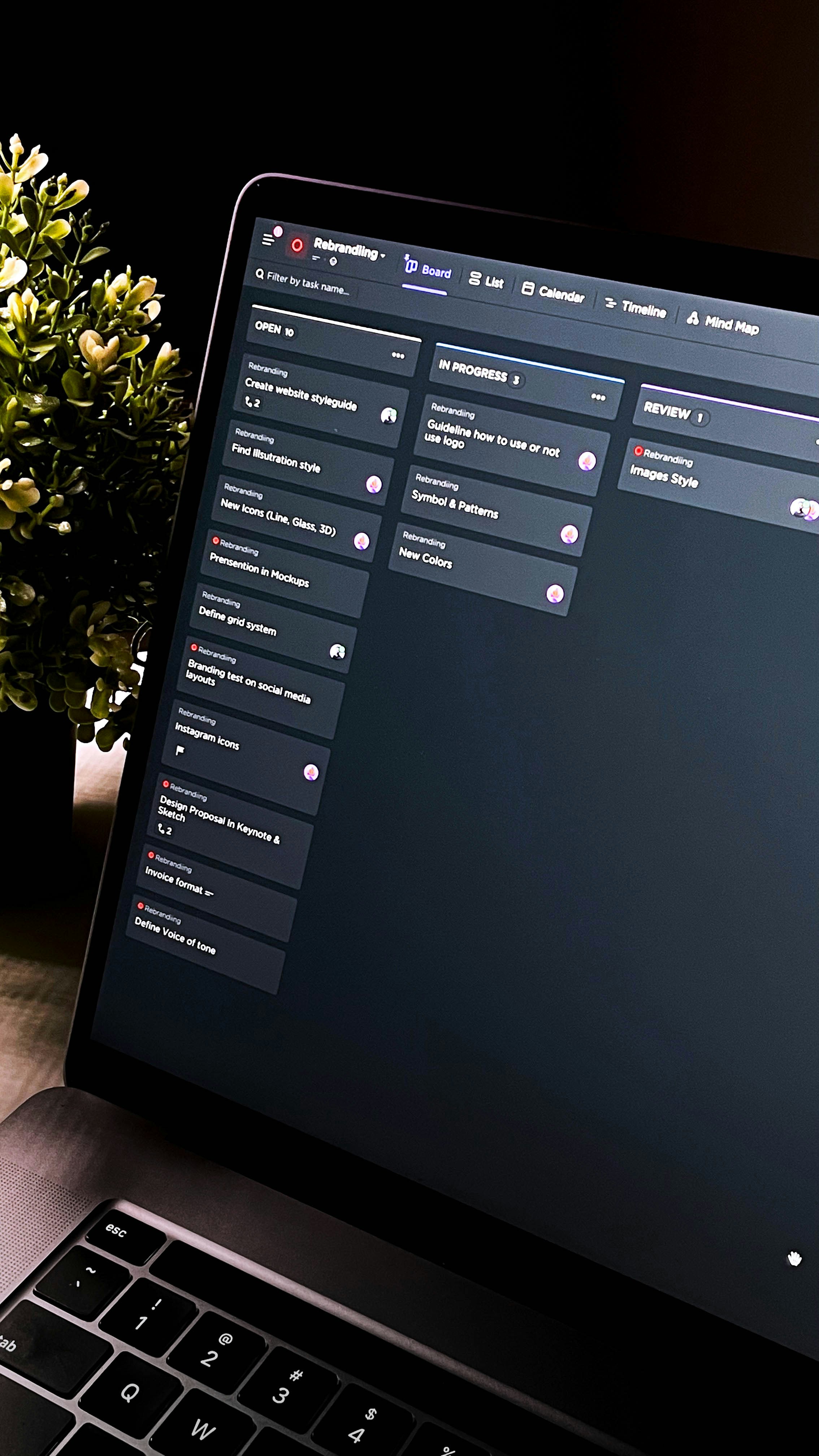
Asana remains incredibly popular due to its intuitive interface and versatile views (List, Board, Timeline). In 2026, its deep workflow automation and robust goal-tracking features make it perfect for marketing, design, and operations teams.
Jira: The Developer’s Choice
For software engineering teams practicing Agile or integrating with DevOps CI/CD pipelines, Jira is unmatched. Its deep integrations with GitHub, complex issue tracking, and advanced sprint reporting make it the industry standard for technical project management.
Monday.com: Visual and Customizable
Monday.com excels in extreme customization. Its highly visual, spreadsheet-like interface allows teams to build custom workflows for virtually any use case, from CRM pipelines to complex construction project scheduling.
ClickUp: The All-in-One Workspace
ClickUp aims to replace multiple apps by combining task management, document collaboration, and goal tracking into a single unified workspace. Its high feature density is powerful but requires a steeper learning curve for onboarding new remote employees.
Security and Integrations
When selecting a tool, enterprise security is paramount. The best platforms offer strict role-based access control, SSO, and compliance with data regulations. Furthermore, seamless integration with communication tools (Slack, Microsoft Teams) and cloud storage is essential to prevent information silos.
Conclusion
Choosing the right project management tool in 2026 depends entirely on your team’s specific workflow. Whether you prioritize Agile development, visual customization, or AI-driven automation, implementing the correct platform will dramatically increase your remote team’s efficiency and alignment.
Comprehensive 2026 Enterprise Adoption and Scale Deep Dive
As we navigate deeper into 2026, enterprise adoption of these technologies has reached unprecedented levels. Organizations are no longer viewing these implementations as experimental sandboxes but as mission-critical infrastructure required for basic operational survival. The shift from legacy monolithic systems to agile, distributed, and highly automated architectures has accelerated. This transformation is largely driven by the need for hyper-scalability and the integration of artificial intelligence at every layer of the technology stack. Companies that fail to modernize their approach are finding themselves outpaced by digital-native competitors who can iterate and deploy features at a fraction of the cost and time. This trend represents a fundamental restructuring of how business value is delivered through software.
Furthermore, the economic landscape of 2026 demands extreme efficiency. Cloud expenditures are being scrutinized, leading to the rise of FinOps practices where engineering teams are directly responsible for the financial impact of their architectural decisions. This has spurred a massive migration towards serverless computing, edge networks, and optimized compute instances that scale down to zero when not in use. The integration of advanced analytics allows businesses to precisely forecast demand and provision resources dynamically, virtually eliminating wasted compute cycles and massive overhead costs.
Security, Compliance, and Data Governance Expansion
Alongside rapid technological advancement, the security threat landscape has evolved into a highly sophisticated ecosystem. In 2026, zero-trust architecture is the default standard. The perimeter-based security models of the past are entirely obsolete in a world where remote work is ubiquitous and applications are accessed globally from unmanaged devices. Every access request, regardless of origin, must be strictly authenticated and authorized continuously using advanced cryptographic protocols.
Compliance mandates have also tightened globally. Frameworks like the evolved GDPR and new international data sovereignty laws require organizations to maintain granular control over where user data is processed and stored. Developers must implement privacy-by-design principles from the initial sprint. This involves techniques such as cryptographic data sharding, advanced anonymization, and leveraging secure enclaves for processing highly sensitive information. Automated compliance auditing is now deeply integrated into CI/CD pipelines, ensuring that no code reaches production if it violates regulatory policies.
The Developer Experience and Tooling Ecosystem Analysis
The developer experience (DevEx) in 2026 has been revolutionized by the integration of large language models and AI-assisted coding tools. The barrier to entry for building complex systems has lowered, but the ceiling for mastery has risen. Engineers are now orchestrators of AI agents, spending less time writing boilerplate syntax and more time designing resilient architectures and solving complex domain-specific business logic. This paradigm shift requires a new set of skills focused on systems thinking rather than rote memorization of syntax.
Tooling has converged into unified platforms that provide end-to-end visibility. From the moment code is committed, developers have real-time insights into security vulnerabilities, performance regressions, and potential integration conflicts. This holistic approach to the software development lifecycle (SDLC) drastically reduces the cognitive load on engineering teams, preventing burnout and increasing overall velocity. However, this heavy reliance on automated tooling requires a profound understanding of the underlying principles to troubleshoot effectively when the abstractions inevitably leak or fail gracefully.
Long-term Strategic Outlook for 2027 and Beyond
Looking ahead, the convergence of quantum computing precursors, advanced AI, and decentralized networks will create a new paradigm of computing. Organizations must build architectures that are not just scalable, but fundamentally adaptable. The concept of ‘composable enterprises’—where business capabilities are exposed as flexible, independent APIs—is becoming the blueprint for future-proof design and rapid market iteration.
Success in this era requires a culture of continuous learning and psychological safety. Engineering teams must be encouraged to experiment with emerging technologies while maintaining rigorous operational discipline. The leaders of 2026 understand that technology is not just a support function, but the primary driver of business innovation and value creation in an increasingly digital and interconnected world.
Frequently Asked Questions
How does this impact existing legacy systems and mainframes?
Legacy systems must be systematically decoupled. The strangler fig pattern is widely used in 2026 to gradually migrate functionality from massive monoliths to modern, independent microservices without disrupting ongoing mission-critical business operations during the transition phase.
What are the primary cost considerations for migration?
While initial modernization requires significant capital expenditure and training investments, the long-term operational expenses (OpEx) are drastically reduced through comprehensive automation, highly optimized resource utilization, and significantly fewer critical security incidents and downtime events.
How do engineering teams manage the expanding skills gap?
Organizations are investing heavily in continuous, integrated upskilling programs. Pair programming with AI assistants is accelerating the onboarding process for junior developers, allowing them to grasp complex architectures and contribute meaningfully to the codebase much faster than previous generations.
Is vendor lock-in a significant operational risk?
Yes, utilizing highly specific proprietary managed services inherently increases lock-in. To proactively mitigate this risk, many large enterprises adopt multi-cloud strategies or heavily utilize open-source abstraction layers like Kubernetes to maintain workload portability and negotiation leverage across different cloud providers.
Tags:
More from TechLein Editorial Team
View all articles →
FASTag Annual Pass 2026: Price, Eligibility and How to Apply
Everything about the FASTag Annual Pass in 2026: who is eligible, how trips are counted, how to activate it via Rajmarg Yatra and what it does not cover.

ABHA Health ID Card 2026: How to Create and Use Your Digital Health Account
How to create and use an ABHA health ID card in 2026: Aadhaar and driving licence routes, ABHA address, linking records and consent-based sharing.

How to Compare Mobile Recharge Plans in India (2026 Value-for-Money Guide)
How to compare mobile recharge plans in India using cost per GB and cost per day, daily-limit versus total-data packs, OTT bundles and unlimited-call fine print.