Augmented Reality (AR) and Virtual Reality (VR): Transforming Digital Experiences in 2026
Explore the revolutionary impact of AR and VR technology in 2026. Discover immersive experiences, practical applications, hardware advancements, and future trends.

Introduction to the AR/VR Revolution
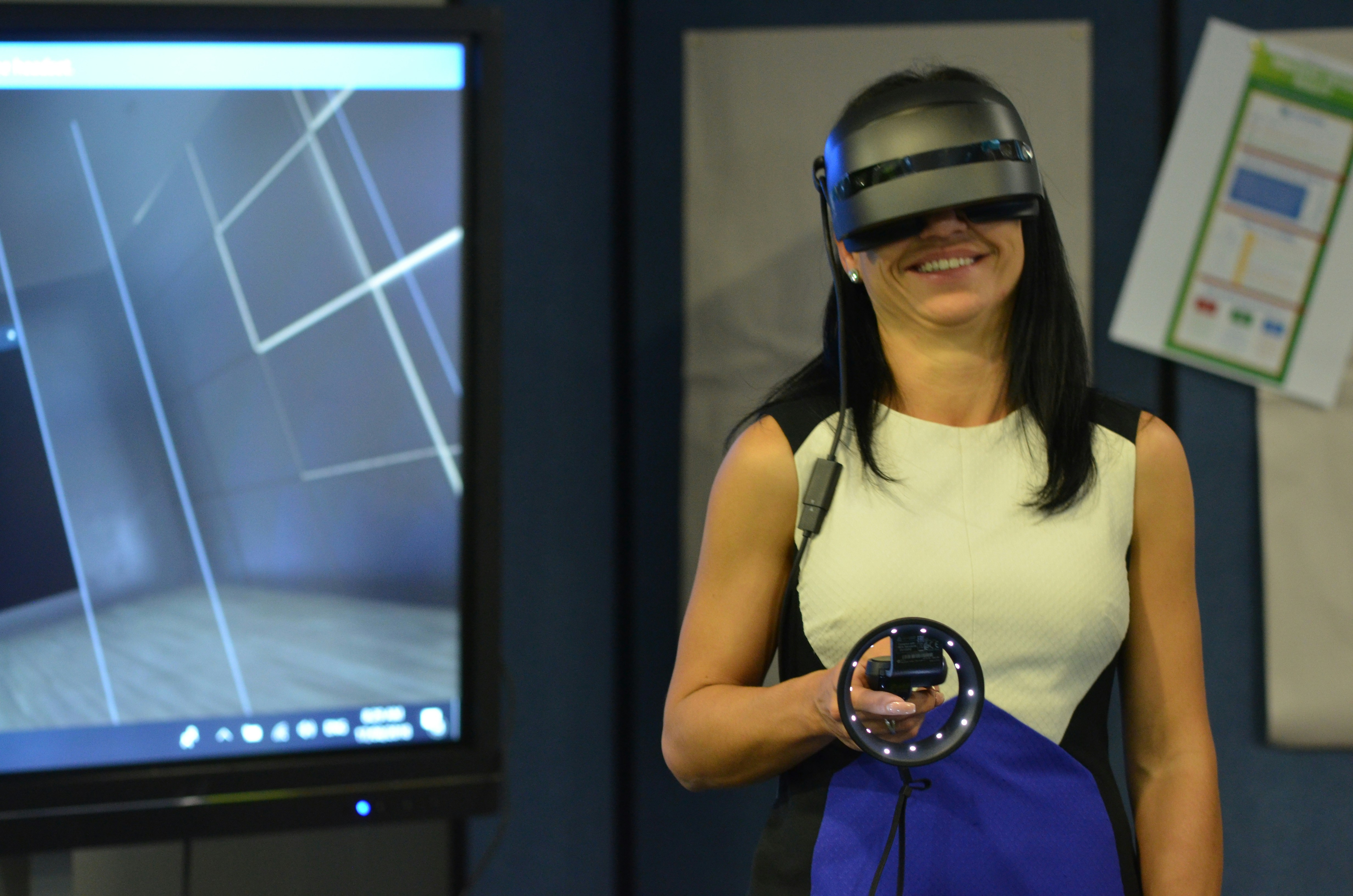
The dawn of 2026 has brought about a profound technological shift, firmly establishing the augmented reality virtual reality 2026 revolution at the forefront of digital transformation. What was once confined to the realms of experimental gaming and niche military training has now explosively permeated mainstream consumer and enterprise markets. These AR VR technology paradigms are systematically dismantling the traditional boundaries between physical reality and digital environments, ushering in an era of truly immersive experiences. By enabling users to either seamlessly overlay digital data onto their physical surroundings or completely submerge themselves in fully synthesized worlds, these technologies are fundamentally altering how we work, learn, shop, and socialize.
AR and VR Fundamentals: Defining the Spectrum
Grasping the immense potential of these technologies requires understanding the core definitions and critical differences. Virtual Reality (VR) is characterized by complete sensory immersion; users don headsets that entirely replace their physical environment with a fully synthesized, highly interactive digital landscape. Conversely, Augmented Reality (AR) is additive, utilizing cameras and sophisticated sensors—typically via smartphones or advanced smart glasses—to overlay contextual digital information and interactive holograms directly onto the user’s view of the real world. The synthesis of these technologies creates Mixed Reality (MR), where physical and digital objects co-exist and interact in real-time. Collectively, this entire spectrum is referred to as Extended Reality (XR). Understanding this taxonomy is absolutely essential for navigating the rapidly expanding hardware and software ecosystems defining 2026.
AR Technology Deep Dive: Augmenting Reality
At a highly technical level, AR relies heavily on advanced computer vision and simultaneous localization and mapping (SLAM) algorithms to anchor digital objects perfectly within physical space. The hardware ecosystem has matured drastically; while mobile AR remains ubiquitous, lightweight, stylish smart glasses have finally overcome massive battery and display constraints to achieve widespread consumer adoption. These devices utilize highly complex depth sensors, LiDAR, and edge computing to process physical environments instantly. The software layer interprets this data, seamlessly projecting navigation routes directly onto the pavement, rendering highly complex 3D engineering models atop physical workbenches, and providing real-time, context-aware facial recognition overlays during professional networking events, demonstrating the profound utility of modern AR architecture.
VR Technology Deep Dive: Synthesizing Worlds
Virtual Reality architecture is focused on absolute sensory deception. Modern VR hardware in 2026 features stunning 8K micro-OLED displays per eye, practically eliminating the ‘screen-door effect.’ Untethered, standalone headsets dominate the market, utilizing immensely powerful internal processors to render highly complex 3D graphics at blistering 120Hz refresh rates. Crucial to immersion is flawless six-degrees-of-freedom (6DoF) motion tracking, allowing users to move naturally within the virtual space. Furthermore, the integration of advanced haptic feedback suits and highly sensitive hand-tracking gloves provides deep tactile sensation, allowing users to physically ‘feel’ virtual textures and weight, effectively crossing the threshold from visual simulation to genuine physical presence.
AR Applications and Transformative Use Cases
The practical applications of AR are profoundly disrupting traditional industries. In retail, AR enables customers to virtually “try on” clothing or instantly visualize how complex furniture fits within their living rooms, drastically reducing return rates. In highly precise healthcare environments, surgeons utilize AR to overlay critical patient MRI scans directly onto the surgical field, achieving unprecedented precision. Educational institutions leverage AR to project highly interactive, animated historical events or complex molecular structures onto classroom desks. Furthermore, in massive manufacturing and logistics hubs, workers receive instant, hands-free AR instructions and real-time inventory navigation, massively increasing operational efficiency and dramatically reducing costly human errors.
VR Applications and Enterprise Utilization
VR continues to dominate the entertainment and gaming sectors, providing highly visceral, unparalleled interactive experiences. However, its enterprise applications in 2026 are equally revolutionary. In corporate training, VR creates highly realistic, completely safe simulations for extremely hazardous occupations, such as high-voltage electrical repair or complex emergency response scenarios. Medical students utilize VR to repeatedly practice highly complex surgical procedures without any patient risk. Architects and urban planners conduct incredibly detailed virtual walk-throughs of massive construction projects before a single physical brick is laid. Additionally, VR has revolutionized remote collaboration, allowing distributed global teams to convene in highly interactive, 3D virtual boardrooms, drastically reducing global travel expenditures.
AR vs VR Comparison: Strategic Implementation
A rigorous AR vs VR comparison reveals distinct strategic use cases. VR provides absolute, isolated immersion, making it the definitive choice for intense, focused training simulations and highly immersive entertainment. However, its isolating nature limits continuous daily adoption. AR, by contrast, is deeply contextual and inherently social, designed to enhance, rather than replace, real-world interactions. AR hardware is generally more expensive to miniaturize effectively, yet it boasts massive, ubiquitous adoption due to its seamless integration into existing mobile architectures. Organizations must conduct a thorough complexity and cost-benefit analysis, determining whether their highly specific use case requires absolute digital immersion (VR) or contextual environmental enhancement (AR).
Development Tools and Robust Platforms
The developer ecosystem powering this revolution is incredibly robust. Dominant cross-platform engines like Unity and Unreal Engine provide the foundational architecture for building highly complex, hyper-realistic 3D environments. For native AR development, Apple’s ARKit and Google’s ARCore provide highly sophisticated environmental understanding and impeccable motion tracking natively on mobile devices. Enterprise platforms like Vuforia offer incredibly advanced object recognition and complex markerless tracking. Developers highly proficient in C#, C++, and specialized 3D modeling tools like Blender or Maya are in massive global demand. Rigorous testing protocols are absolute prerequisites, ensuring applications maintain flawless frame rates and precise spatial anchoring across highly diverse, fragmented hardware ecosystems.
Navigating Performance and Technical Challenges
Despite massive advancements, immense technical challenges persist. Latency remains the absolute enemy of XR; even a microscopic delay between physical movement and visual rendering causes severe motion sickness, severely limiting adoption. Pushing millions of highly complex polygons per second requires immense processing power, placing massive strain on deeply constrained battery capacities within standalone headsets. Furthermore, developing optical displays capable of projecting highly vibrant holograms in direct sunlight (for AR) without causing eye strain remains a massive engineering hurdle. Overcoming these bottlenecks absolutely requires aggressive software optimization and massive reliance on advanced edge computing and ultra-fast 5G networks to offload heavy rendering tasks from the local device.
Pioneering User Experience and Design
Designing for XR requires a total paradigm shift away from traditional 2D flat-screen interfaces. Immersive design mandates spatial thinking; developers must perfectly orchestrate 3D spatial audio, intuitive gaze-based interaction, and natural gesture recognition. The UI must integrate seamlessly into the environment without obscuring critical physical surroundings in AR. Accessibility remains a massive challenge, requiring designers to accommodate highly diverse physical capabilities and prevent cognitive overload. Ensuring absolute physical comfort during prolonged headset usage and adhering rigorously to complex ergonomic interaction design principles are absolutely critical for sustaining long-term user engagement.
Analyzing Real-World Case Studies
Analyzing highly successful real-world implementations validates the massive ROI of XR technology. The pioneering IKEA Place AR application massively revolutionized furniture retail, providing concrete metrics demonstrating drastically increased conversion rates and reduced product returns. In the medical sector, institutions deploying VR for surgical training report a 230% improvement in procedural accuracy compared to traditional methods. Massive enterprise solutions deployed by companies like Boeing and Ford utilize highly advanced AR headsets for complex wire harnessing and assembly, reporting an astonishing 30-40% reduction in manufacturing time, proving definitively that XR is a highly lucrative, mission-critical operational asset.
Addressing Challenges and Adoption Limitations
Massive adoption is still hindered by profound challenges. The exorbitant costs of highly advanced, enterprise-grade hardware severely limit universal accessibility. Complex hardware limits regarding field-of-view (FOV) and heavy form factors remain significant adoption barriers for prolonged usage. Furthermore, generating highly optimized, hyper-realistic 3D content requires immense specialized labor and massive capital investment. Critical privacy concerns are mounting, as AR glasses constantly record and analyze immense swaths of public environmental data and highly sensitive biometric inputs. Conquering motion sickness entirely across all demographics remains an ongoing, highly complex physiological puzzle.
The Future Trends of the Metaverse
Looking toward 2027 and beyond, the trajectory of XR points definitively toward the highly anticipated metaverse—a massively interconnected, persistent network of 3D virtual worlds. Hardware improvements will yield incredibly lightweight, socially acceptable AR contact lenses. The massive, ubiquitous rollout of 5G infrastructure will definitively eliminate latency bottlenecks. We anticipate massive integration with AI-powered AR/VR, where highly intelligent, generative algorithms instantly construct incredibly complex, bespoke virtual environments in real-time based on natural language voice commands, ushering in an era of infinite digital creation.
Conclusion and Strategic Directives
In conclusion, the augmented reality virtual reality 2026 revolution represents a massive, irreversible paradigm shift in human-computer interaction. By deeply understanding the highly complex nuances of AR VR technology and strategically implementing these profound immersive experiences, organizations can definitively achieve massive operational efficiency and drive incredible digital transformation. We strongly recommend immediate, aggressive investment in XR pilot programs to secure massive long-term competitive advantage. Discover highly innovative technology solutions, advanced architectural strategies, and expert engineering insights at Techlein.
Tags:
More from TechLein Editorial Team
View all articles →
FASTag Annual Pass 2026: Price, Eligibility and How to Apply
Everything about the FASTag Annual Pass in 2026: who is eligible, how trips are counted, how to activate it via Rajmarg Yatra and what it does not cover.


ABHA Health ID Card 2026: How to Create and Use Your Digital Health Account
How to create and use an ABHA health ID card in 2026: Aadhaar and driving licence routes, ABHA address, linking records and consent-based sharing.

How to Compare Mobile Recharge Plans in India (2026 Value-for-Money Guide)
How to compare mobile recharge plans in India using cost per GB and cost per day, daily-limit versus total-data packs, OTT bundles and unlimited-call fine print.